Review, reflection and planning
The Gender and Digitalisation across Contexts (GENDIG) project, funded by NORAD, is now in its final year. Launched in 2021, the GENDIG project has developed a programme of teaching, research and exchange across partner institutions and countries, with an emphasis on comparative and context-sensitive approaches to gender and digitalisation.
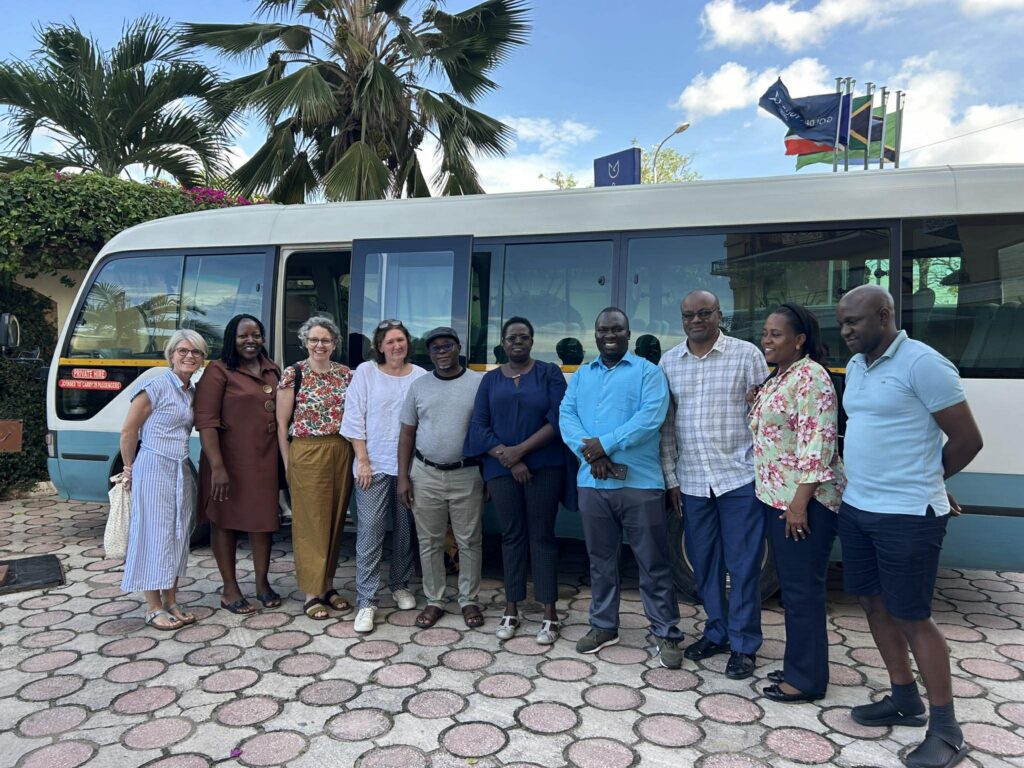
Throughout the project, we have prioritised in-person collaboration alongside digital engagement. Project partners have met at partner campuses to deepen institutional links and strengthen joint teaching and research activities. In late February 2026 the UiA team first convened at the University of Dar es Salaam (UDSM) where we engaged with new and old colleagues from both the Institute of Gender Studies and the Institute of Development Studies and discussed ongoing student and staff exchange initiatives between the University of Agder (UiA) and UDSM that extend beyond the scope of GENDIG. We then proceeded to Zanzibar to meet up with the Ugandan and Tanzanian teams for a three-day workshop. This is the second time that the full GENDIG team meets in Tanzania; the previous meeting was in the fall of 2023.
The workshop had two primary objectives:
- To review the project’s progress from 2021–2026 and consolidate outcomes for dissemination; and
- To identify gaps and plan future collaboration, including a proposal in response to the anticipated NORHED III call (expected to be out during summer 2026).
Workshop outputs included:
- An agreed structure and preliminary call for the final GENDIG conference, to be held in November 2026.
- A refined list of thematic priorities for continued collaboration, informed by comparative reflections on how digitalisation shapes gendered experiences across different locations.
- Concrete next steps for preparing a NORHED III application to sustain and scale successful teaching, research and exchange elements.
Key reflections so far
During the workshop we discussed core conceptual and pedagogical questions, including:
- What digitalisation means in diverse social and institutional contexts;
- How digital transformations shape gendered practices, opportunities and inequalities; and
- What it entails to teach gender studies across geographically and culturally distinct settings.
Although digital tools have expanded opportunities for inclusion and transnational collaboration, participants consistently emphasised that face-to-face meetings add depth and nuance to scholarly exchange that virtual formats alone do not fully replicate.
Next steps
Next steps for GENDIG include finalising the conference programme and issuing the public call for papers for the November 2026 event, while continuing to discuss opportunities to send a proposal to NORHED III to sustain and expand the project’s research, teaching and exchange activities. We will continue to disseminate GENDIG outputs—including teaching materials, policy briefs and academic publications—and promote ongoing student and staff mobility between partner.
Project coordinators will also focus on consolidating workshop outcomes into concrete work plans and timelines to ensure a smooth transition from the current grant period into any follow-on funding, and to support timely delivery of the conference and associated publications. For further information or opportunities to collaborate, interested parties should contact the project coordinators (Ruth Nsibirano, Makerere, Lulu Mahal, UDSM, Arnhild Leer-Helgesen, UiA)