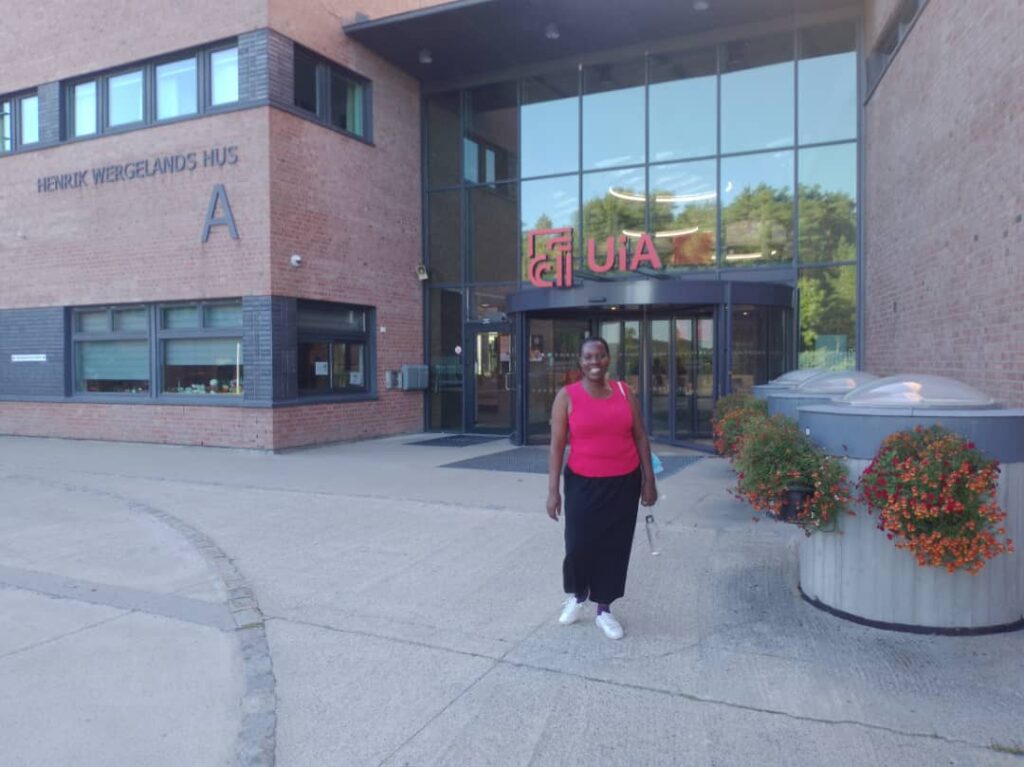
Decolonization and Digitalization in African Gender Studies:
An Interview with Anna B. Ninsiima, Postdoc Scholar at Makerere University
Anna B. Ninsiima and Juliana Koury Gaioso

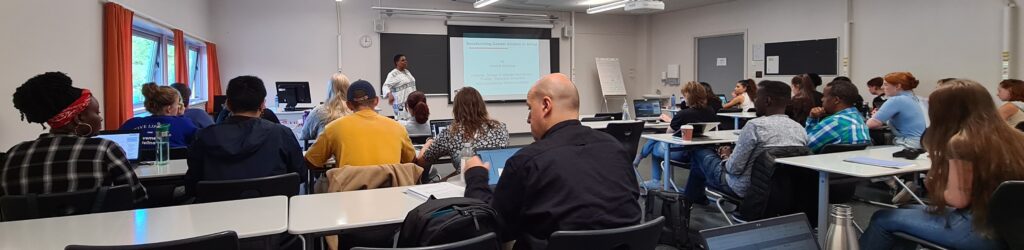
Anna B. Ninsiima, a postdoctoral scholar from the School of Women and Gender Studies at Makerere University, recently delivered a guest lecture in the Global Development Studies department at the University of Agder. Titled “How Tenable is the Decolonization of Gender Studies in Africa?” The lecture explored the intersection of decolonization and gender studies in Africa, and emphasized the significance of digitizing archives to reclaim Africa’s stolen history from the colonial era. Anna’s research extends further, delving into pre-colonial African societies and the roles of women, which deepens our understanding of gender dynamics. Unraveling the distortion promoted by liberal feminism upon African cultures. Ninsiima is part of GENDIG project, and has her research funded by the project.
Following this enlightening discussion, I had the opportunity to sit down with Anna and gain further insights into her work in academia.
Juliana: Hi Anna, thank you for your insightful lecture on the decolonization of gender studies in Africa. Could you please share your academic journey and experiences that have led you to this point?
Anna: Certainly, Juliana. I’m a postdoc scholar at the School of Women and Gender Studies at Makerere University, funded by the GENDIG project. My research primarily focuses on the digitization of archives and its role in decolonizing gender studies in Africa. I’ve been passionate about this topic for quite some time. Even before starting my postdoc, I had already begun researching and even submitted a paper on decolonization. My interest stems from questioning the content we teach in gender studies, which often lacks African perspectives. I also realized that we needed to explore our pre-colonial history to truly understand gender dynamics, identities, and address the distortions caused by liberal feminism.
Juliana: Beyond improving access, what other findings have emerged in your research related to digitization?
Anna: Digitizing archives plays a crucial role in this process, but it’s essential to acknowledge the political dimensions involved. The selection of which archives to digitize can be biased. It raises questions about who gets to decide what gets preserved digitally and what doesn’t.
Juliana: What motivated you to delve into this specific area of research?
Anna: I’ve always wondered about the content we teach and why it predominantly focuses on American and European figures, neglecting African women and perspectives. The turning point came during my master’s studies in Bergen when I encountered writings by Oyewumi. She argued that some of the gender concepts we encounter do not describe the African lived experiences. Seniority was largely based on age not sex in most African societies.. It made me question the distortions we unknowingly perpetuate about African culture. This curiosity led me to explore and attempt to correct these misconceptions.
Juliana: How would you describe decolonization in the context of your research, and why is it particularly significant for African gender studies?
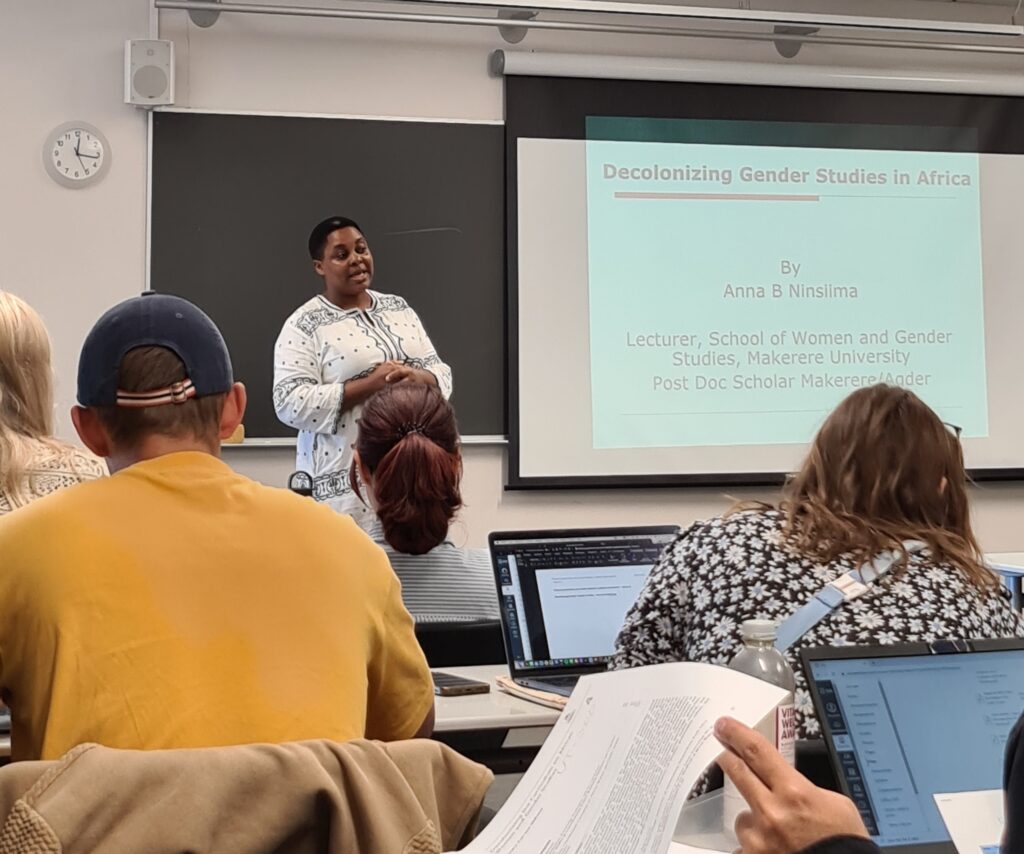
Anna: Decolonization, in my view, involves dismantling the distortions around gender and African culture. It’s about understanding and embracing African cultural values and practices. This knowledge can empower gender studies by providing legitimacy to the issues we address. It allows us to bridge the gap between what we teach and the reality we aim to address. Decolonisation also involves the understanding of neo-colonialism and dismantling it. Neo-colonialism had been entrenched through neo-liberal policies and capitalistic tendencies.
Juliana: In your lecture, you emphasized the importance of critically analyzing content for decolonization, as you mentioned “It is more than to include African authors, but be critical about the content”. Could you elaborate on this aspect?
Anna: Absolutely, Juliana. We must be critical of the content we include in our curriculum. For a long time, we have blamed African culture for various issues, such as poverty or gender-based violence, a text that does not engage these challenges critically should not be suitable for inclusion. Instead, we should seek literature that promotes historical context, addresses colonialism, neo-colonialism and recognizes the complexities of African culture. It’s not about the author’s nationality but the content’s relevance to the decolonization process.
Juliana: Can you share some preliminary findings from your current research?

Anna: While my research is still ongoing, one significant finding is the role of women in leadership roles in African history, which often goes overlooked. For instance, in Uganda, women historically held leadership positions, including religious leadership. Similarly, Ethiopia and Egypt had female rulers. These facts are often undocumented, but I aim to shed light on them to challenge misconceptions about African culture.
Juliana: You mentioned the challenge of language in decolonization efforts. How do you see this issue evolving?
Anna: The language barrier is indeed a significant challenge. While we are challenged for using English (not indigenous) as a medium for communication, we need to start somewhere. Once our ideas gain recognition, we can gradually transition to indigenous languages. Decolonization should be an incremental process, but it’s vital that we begin and work towards making our voices heard.
Juliana: In your lecture, you discussed the recognition of legitimate knowledge that doesn’t come from Western institutions. How can academia play a role in addressing this challenge?
Anna: Academia holds a pivotal role in influencing societal perspectives. People look up to scholars as sources of knowledge. We inform policy and shape public discourse. As educators, we have a responsibility to provide students with a balanced and contextually relevant education. This includes acknowledging and legitimizing knowledge that doesn’t originate from Western institutions. We must emphasize the importance of diverse sources of knowledge, including oral traditions and indigenous wisdom.
Juliana: Lastly, what advice would you offer to aspiring scholars and researchers interested in pursuing decolonization in gender studies?
Anna: Decolonization is a challenging and complex journey, often involving power struggles. As scholars, we must be prepared to speak truth to power and engage in meaningful dialogues. We should approach this process with strength and a commitment to fostering understanding. While it may be controversial, it’s essential to persist and ensure our voices are heard. Our contributions can lead to a more inclusive and authentic academic landscape.
A Journey of Gender Perspectives: From Makerere University to the University of Agder
Fionah and Alfred, Students from Makerere University School of Women and Gender, Embark on the GENDIG Project Journey with the Support of Erasmus+ Scholarships
By Fionah Agaba Barbra, Master student in Gender Studies
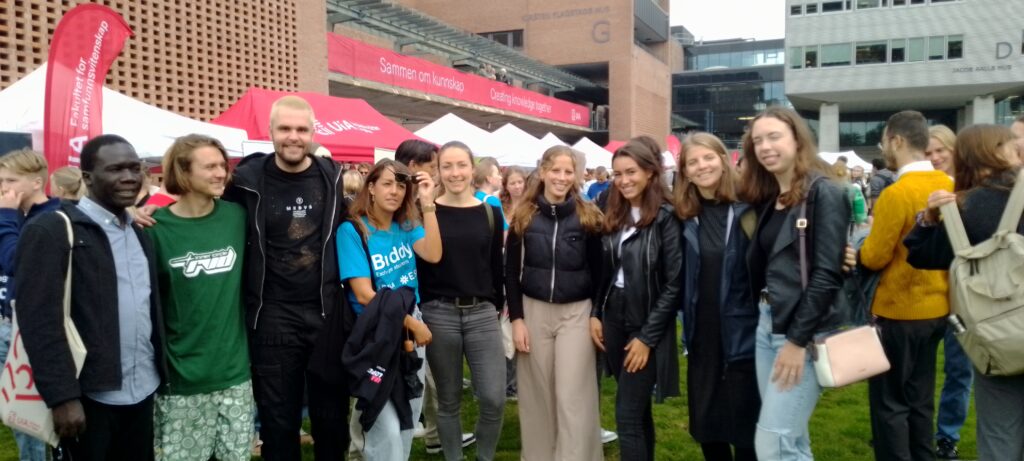
Velkommen til Universitetet i Agder! I was nominated by the Gender and Digitalisation (GENDIG) project to participate in the exchange programme that is funded under ERASMUS+ scholarship. My adventure as an exchange student from the vibrant campus of Makerere University in Uganda to the picturesque landscapes of Norway at the University of Agder began on 9th August 2023. Boy, oh boy! has it been an exhilarating odyssey that spans continents and ideologies.
My perceptions across cultural, academic, social, and political realms have been challenged within this short period of time but what an enriching journey it is. I’ve woven together diverse perspectives, forged connections that transcend borders through dynamic social interactions, and insightful discussions with the other students in my Global Development Studies Masters program. I’m truly excited about what the next four months have in store for Alfred Andama and I. I look forward to this being a transformative period that will expand my intellectual horizons and also deepen my cultural sensitivities, especially in understanding the different gender dynamics of Norway.
Thank you to the School of Women and Gender Studies Makerere University, Fakultet for samfunnsvitenskap and Universitetet I Adger for this amazing opportunity.
By Alfred Andama, Master sutent in Arts in Gender Studies
Pursuing Masters of Arts in Gender Studies has made me look at life in a more accommodative, compassionate and empathetic lens. I joined the masters class in Makerere University School of Women and Gender studies in 2022 after being admitted in the 2021/2022 academic year. The hunger and desire to learn from the richness that the School provided in terms of dedicated and experienced lecturers, Library resource and open minded course mates helped me shape and sharpen my ambition to pursue the course. The Imaginaries of gender in day to day discussions and work spaces is characterised by inadequate subject matter which commonly leads to the use of ill-informed methods in addressing systemic gender inequalities. These inequalities influence how shocks and crisis are managed in Uganda.
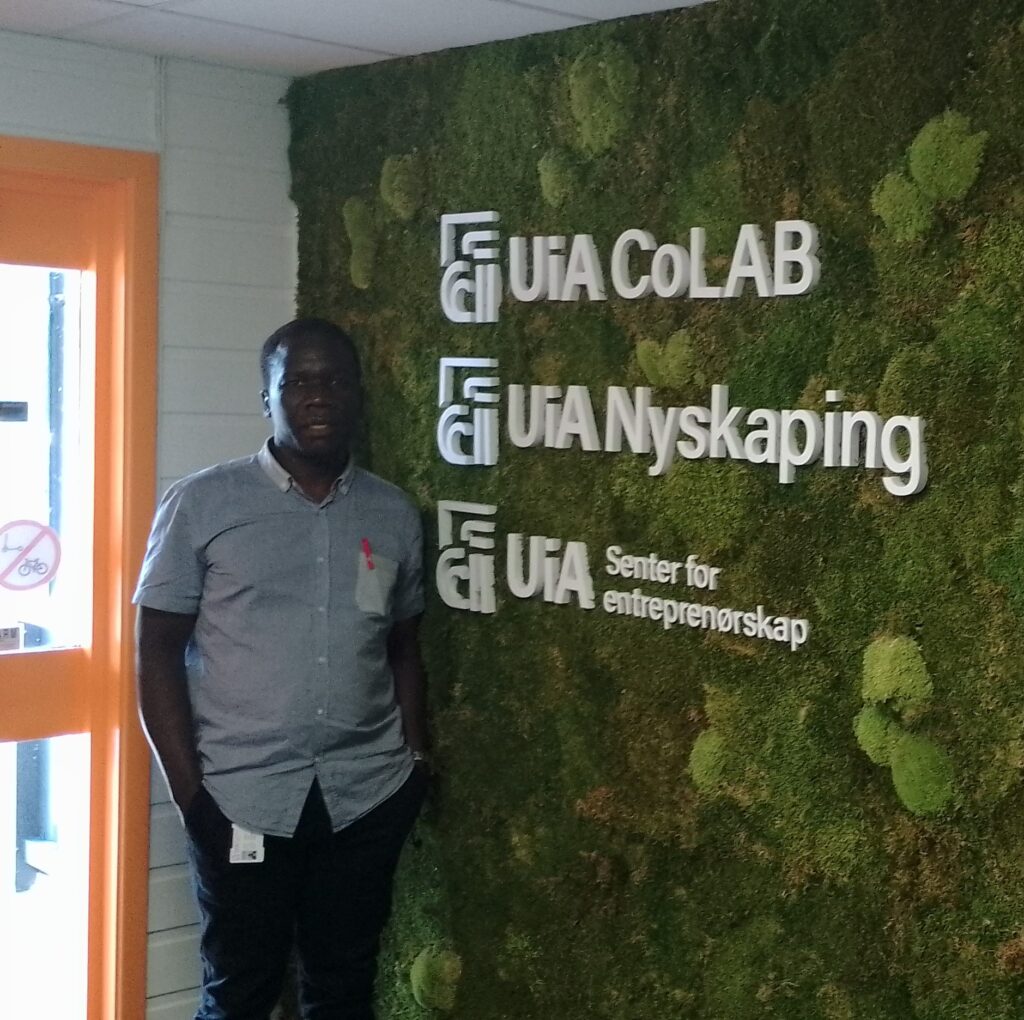
The exchange program between Makerere University and the University of Agder (UiA) in Kristiansand (Norway) has given me an opportunity to study Masters in Global Development Crisis and Change. This program helps me to improve on my research skills and understanding of the different types of Crisis within our communities, nation, region and globe at large. My Gender grounding plays an important role in discussing Crisis with a targeted approach to answer the question of who is most affected by the crisis and excluded in the management. This approach provides an al-inclusive augment in the pursuit of the master’s course.
Climate crisis, Financial crisis Health Crisis and all other types of Natural crisis are not uncommon in Uganda Africa and the world at large. A gendered approach to researching crisis the way to go research if policy making process and interventions are to be supported by knowledge creation to improve the livelihood of people.
I intend to use my time of studying in Norway to gain more knowledge in understanding Global crisis, and improve my writing skills to inform policy and provide rich alternatives for interventions in crisis management.
I thank the school of women and gender studies for entrusting me to take this course.

Norhed Project II Broadening Opportunities and Perspectives
Juliana Koury Gaioso and Kasirye Oliver Namirembe

Gendig has promoted cross-cultural experiences, positively affecting exchange students’ lives and enriching the perspectives of other students and lectures.
Namirembe Oliver Kasirye, a master’s student at Makerere University, Uganda, has been on exchange at the University of Agder, Norway, during the autumn semester of 2022. She received a scholarship as part of the GENDIG project and reported how the experience provided enriched her life and future career. On the other side, she impacted the lives of people she met with her knowledge and new perspectives, such as mine, a mother, master’s student and immigrant settled in Kristiansand. In the last month, Kasirye and I have been exchanging messages on Whatsapp and emails. I have learned a lot from her story and experience.
Education as a priority
A great lesson from Kasirye was to break with gender stereotypes about the global South, especially the empowerment of women in her context, as she says, “most women are the breadwinners because, sometimes, after producing children, some men decide to dissert home. This means one must struggle to make ends meet but with much pain.” Based on her experience, besides being the breadwinner for her children, she also adopted her sister’s children, who passed away from a snake bite.
To manage a life with eight children, Kasirye worked nights as a vendor on the side of her studies. Besides that, she manages to educate her children with loans. Her firstborn just completed a degree in Population Studies and now applied for a Master of Arts in Gender Studies, another one is just starting electrical engineering, and the fifth born is studying Biotechnology Laboratory.

The exchange
This exchange became feasible since the GENDIG project provided living allowance and housing funding. In the middle of the challenges, she had the opportunity to see things from another perspective, “I learned and appreciated myself as an African woman from Uganda who grew up in a typical village setting. Traveling to Norway was my first time leaving and traveling to a dominantly white people country.” The learning experience helped her improve her Academic Writing and her perspective on life: “I learned to associate and how students understood and perceived education and career. I acquired more knowledge in the use of computers and various academic platforms. At first, it challenged me, but I later embraced the technology.”
Lessons for life, “One of the biggest was multicultural diversity. It was a program that brought together students from all walks of life and cultures”. In a developed and expensive country like Norway, Kasirye also reported her challenges: “The four months I was away taught me a lot, more responsibility and economic management.” Besides the obstacles of facing the cold November and the darkness at four o’clock in the afternoon.
Challenging the understanding of wealthy
Among the adaptations during the period she was in Kristiansand, one of the most difficult was related to food, “as an African coming from a country with a variety of food items, in Kristiansand, Norway, I had to eat rice and Irish potatoes on a daily basis, it was really hard for me, but I managed.” Coming from a tropical country, as well, I can agree with her. In Brazil, the variety of food in each meal is incomparable. Besides, having a varied diet with three warm meals is usually not affordable in Norway. Fertile and tropical lands have much more to offer, and still, there is this paradox that we are the countries depending on others that can offer less than our lands.