Juliana Koury Gaioso
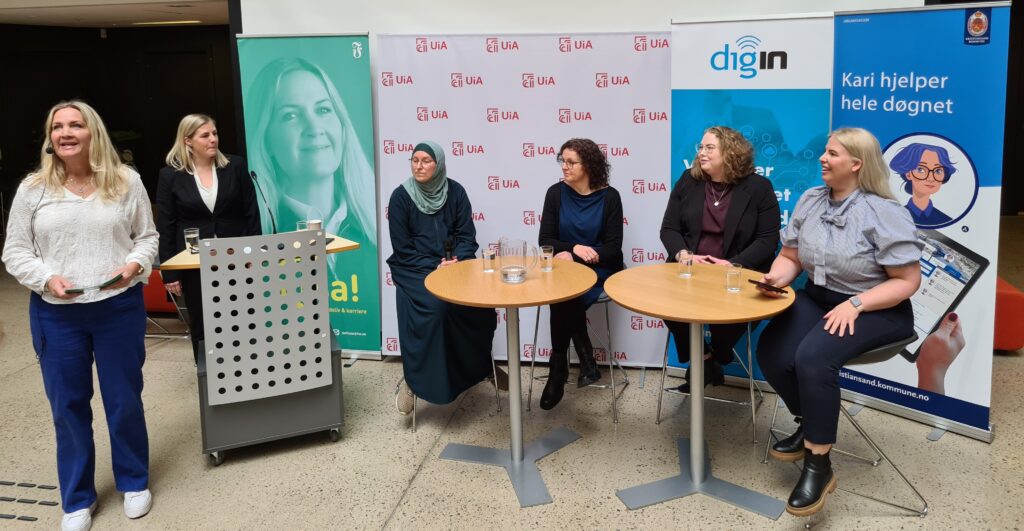
During Democracy Week in Kristiansand, Arnhild Leer-Helgesen, associate professor at Global Development and Planning at UiA and head of the Gendig project, participated in a panel debate on Digitalisation and Technology from an Equality Perspective. She brought a critical view on the structural issues involving the digitalisation of the world, asking who is out and who gains. On her side, Heidi Esma Dahl Bønnhoff, associate professor in the Department of Sociology and Social Work at UiA, pointed out the effects of technology illiteracy on a personal level and how it affects the socialization of women with an immigration background in Norway. Compounding the panel, Rebekka Olsson Omslandseter, Ph.D. Research Fellow from the Department of Information and Communication Technology at UiA brought to the debate the lack of women representatives in technological advances.
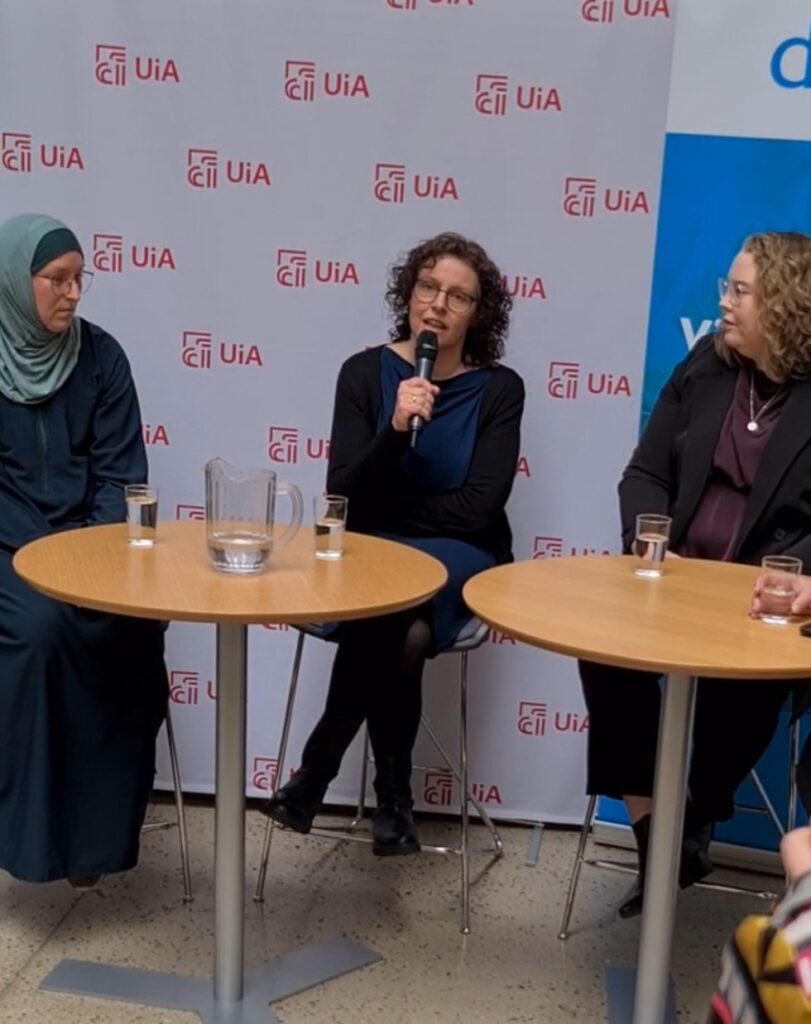
Brigitte Klækken, known from the “Det ho sa” podcast, led the panel and asked Arnhild to clarify the structural issues involving women and digitalisation. She explained, “The Universities in Uganda and Tanzania (Makerere University and University of Dar Es Salaam) approached UiA with a wish to digitalise the master’s degree, which is seen and understood as the future to include more students in education. But the problem is that many women do not have access to a mobile telephone or PC. If they have, internet connection can be poor and unstable, in addition, it is very expensive. So digitalisation does not lead to more equality if we do not adress root causes of economic and social inequalities. Then rural women in Eastern Africa will still be the last to benefit from technological advances. We therefore need to do much more that digitalization to include women in for example higher education”. The GENDIG project, financed by Norad, supports digitalization of Gender Studies, but also research that looks into the effects in terms of inclusion.
Inspiration for the panel/debate:
In times of heated cyberactivism, artificial intelligence and social media control, little is focused on global access to the internet and technology. Women are the majority outside this arena, with 37% without access to the digital world. This scenario raises debate due to its personal, structural and technological impact. To discuss this global scenario, Digin, a Norwegian ICT cluster, Kristiansand Municipality, and the University of Agder organized a panel conversation on the 8th of May in the Kristiansand City Hall. The debate was inspired by the UN topic for international women’s Day, DigitALL Innovation and Technology for Gender Equality.
More info: UN Women Democracy Week